

What is Knowledge?
David Deutsch, the quantum physicist and philosopher, writes in his classic “The Beginning of Infinity”:
“Knowledge is information which, when it is physically embodied in a suitable environment, tends to cause itself to remain so.”
Knowledge is embodied in the form of good explanations.
Deutsch from “The Beginning of Infinity” again:
“A good explanation is one that is hard to vary while still accounting for what it purports to account for.”
Good explanatory knowledge tells you something about the world. A good explanation has reach and is hard to vary.
Knowledge is true information embodied in the physical world.
For the entire history of Homo sapiens, and perhaps for millions of years before that, humans were the only known entities capable of creating explanatory knowledge.
That may have changed yesterday.
Let’s talk about what happened.
The Most Famous Problem in Discrete Geometry
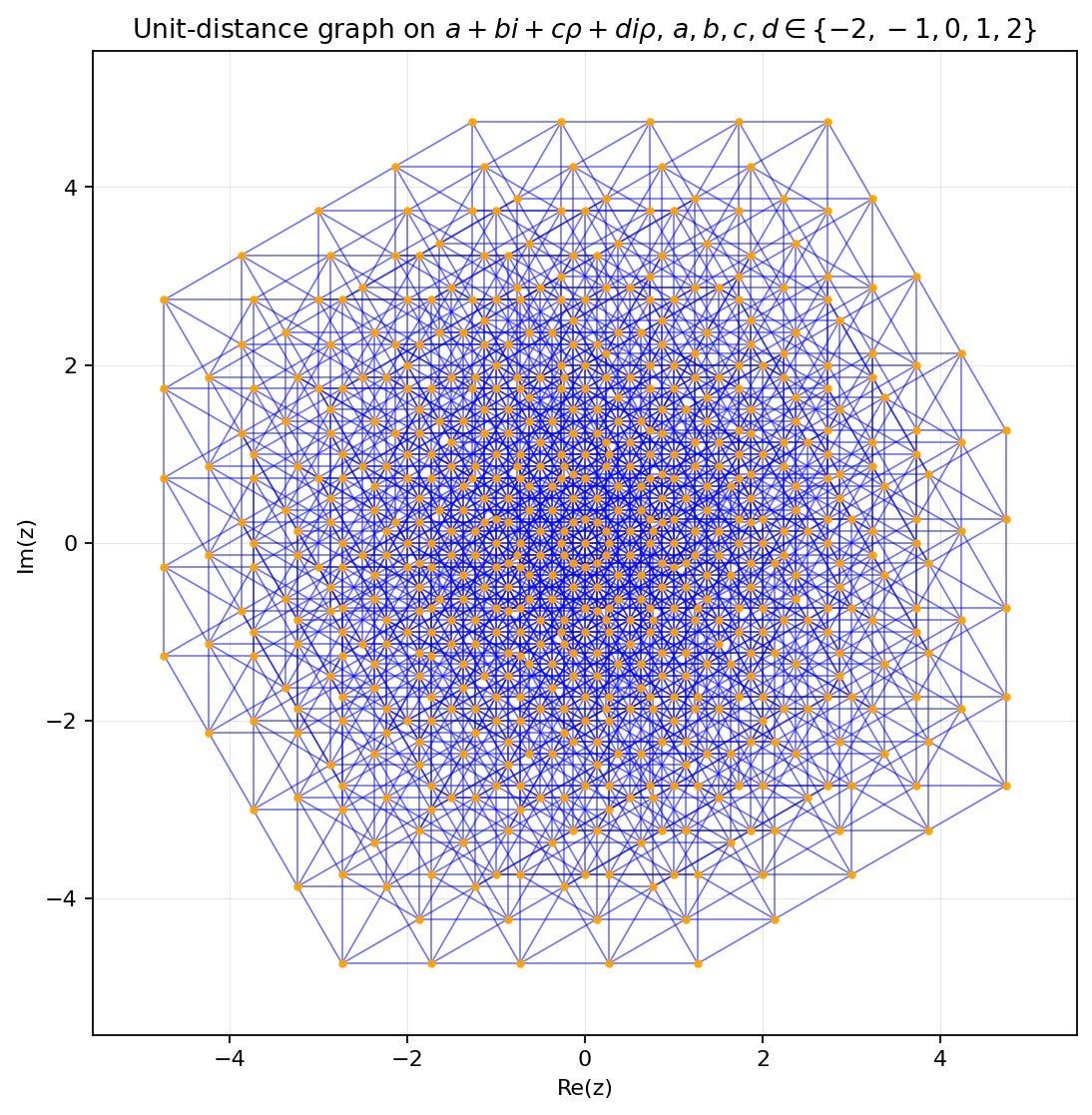
The Erdős problem in question is considered the “most famous problem in discrete geometry.” The problem remained unsolved for 80 years, despite plenty of attention.
I’m no mathematician, so let OpenAI’s Sebastien Bubeck explain what this math problem is:
“The question is stupidly simple; if I put n points in the plane how many distances between those points can be the same?”
OpenAI says that an internal, general purpose reasoning model, not specialized for math, disproved this long-standing conjecture. (Let’s call it GPT-Next, though I’ve heard it’s likely GPT-5.6, the next model to be released by OpenAI.)
Noga Alon, a mathematician who studied Erdős, said about the Unit Distance problem:
“This has been one of Erdős’ favorite problems, I have heard him myself mentioning the problem multiple times in his lectures.”
A few reasons it may have been Erdős’ favorite:
Simple to state. It can be stated in a single sentence: put n points in the plane; how many pairs can be exactly distance 1 apart?
Longevity. It was posed by Paul Erdős in 1946 and stayed alive for 80 years.
He cared about it enough to attach a prize. In 1982 he offered $300, and then $500 in 1995.
The problem appears simple on the surface, but has a deep mechanism underneath.
It was resilient to a solution despite the fact that nearly every geometer thought about it at some point in their career.
You may have seen recent news about Erdős problems solved with AI’s help. This one is different.
More than another Math win for AI
A string of Erdős problems have recently been resolved with AI’s help.
GPT-5.2 Pro + Aristotle/Lean solved Erdős problem #728. That was a narrower number theory problem.
Erdős Problem #650 was AI-Assisted. ChatGPT proposed the proof, then human Mathematicians and Aristotle formalized it.
Terrence Tao has a comprehensive GitHub Erdős AI wiki that lists many contributions AI has made to these problems.
This time is different.
The unit distance problem is central and famous in discrete geometry. This is qualitatively different from past successes.
The earlier AI-assisted Erdős results were like holding your child’s hand while they learned to walk.
This time, your child lets go and takes its first independent steps.
What the AI model actually did
OpenAI frames this model as a “general-purpose reasoning model”. It is not trained specifically for math. It did not solve the problem within a larger system specialized for math.
It was given the problem. It reasoned about it. It disproved the existing conjecture.
Sebastien Bubeck:
Basically what the AI did is that it was able to use its vast knowledge of all of mathematics, to see a connection between discrete geometry and algebraic number theory, and then crucially it was able to masterfully chain together the argument, with expert level calculations at every step.
Noam Brown of OpenAI clarifies further:


This is the key point: an artificial intelligence system added to the corpus of objective human knowledge.
The AI model did that by relying on its own cognitive capabilities.
Experts React
From OpenAI’s announcement:
“an AI system has autonomously resolved a longstanding open problem at the center of an active field.”
Source: OpenAI, “An OpenAI model has disproved a central conjecture in discrete geometry”
From Noga Alon:
“outstanding achievement”
Source: arXiv companion remarks, Section 3: Noga Alon
From Thomas Bloom:
“taught us something new”
Source: arXiv companion remarks, Section 4: Thomas Bloom
From Daniel Litt:
“vast expansion of the attention aimed at mathematical problems”
Source: arXiv companion remarks, Section 6: Daniel Litt
From Timothy Gowers:
“No previous AI-generated proof has come close to that.”
Source: arXiv companion remarks, Section 5: W. T. Gowers
Watch this video. The astonishment is palpable.
The Philosophical Atom
The main point of this essay is this:
The philosophical splitting of the atom is AI’s ability to create new explanatory knowledge. This, for the first time in history, has happened.
Evolution has brought us to the point where we can unlock the power of knowledge itself, much as splitting the atom unlocked the power of matter.
Sebastien Bubeck was careful to explain that this result does not represent “inventing new mathematics”:
It is truly a breakthrough result, yet at the same time it is also true that the model didn’t “invent” any “new mathematics”.
But this is the crucial point: merely being able to know deeply all the results in a scientific field, and being able to use all known arguments expertly and with just the right choice of parameters, that alone can lead to a ton of breakthroughs, and this is not just limited to mathematics, this type of (extremely) solid expert execution is the bread and butter of many many scientific advances.
Still, this is an example of artificial intelligence independently adding to the corpus of objective truth available to humanity. This is only the beginning. The consequences will be world-changing.
Why Math Came First
Mathematics is the ideal domain for AI. It is abstract and correct answers are verifiable.
That does not mean it’s the only domain where AI can make new discoveries. It’s the scientific domain where it’s easiest for AI to get started. But we are just getting started.
In my essay “Something Big is Happening. It’s Bigger than You Think” I argued that the implications of rapid AI progress are farther reaching than most realize. Claude Mythos for example is doing unprecedented things when it comes to Cybersecurity. Mythos was also not trained specifically for Cybersecurity.
Even if you do not care much for math, I am in that boat too, results like this will reach far beyond mathematics.
Beyond Mathematics
Theoretical scientific fields are the next intellectual dominoes to fall.
Think:
Theoretical Physics
Theoretical Biology
Chemistry
Materials Science
Computer Science
These are domains where AI can operate disembodied, in the realm of abstract information. If you do not visit that world often, you may miss how much power exists there.
Many modern technological breakthroughs began as discoveries in theoretical science. The internet in your pocket is one example.
Theoretical science is one of humanity’s most important handles on reality. It’s what distinguishes us from other animals. We can use our mind to understand and harness reality. AI just began to assist us in that.
It is only the beginning.
A model that can apply sustained attention across long durations will be a force multiplier for creating knowledge. Knowledge that can empower humanity to reach further. To live longer. To go deeper into the wonders of nature. To benefit the world.
It won’t stop with the theoretical either. Right now it’s hard for AI to make as substantial an impact on the physical world. That’s because we don’t have fully functioning robots yet. They are coming. Once AI has a body that can act on the world and run experiments in atomic space, the impact it will have will become even more powerful.
The Beginning of Infinity
This result from OpenAI is not “the end” of discovery or the arrival of final knowledge.
On the contrary, it is a new beginning: a new kind of knowledge-creating process entering the world.
As David Deutsch says:
“We are always at the beginning of infinity.”
Happy to be here with you.